
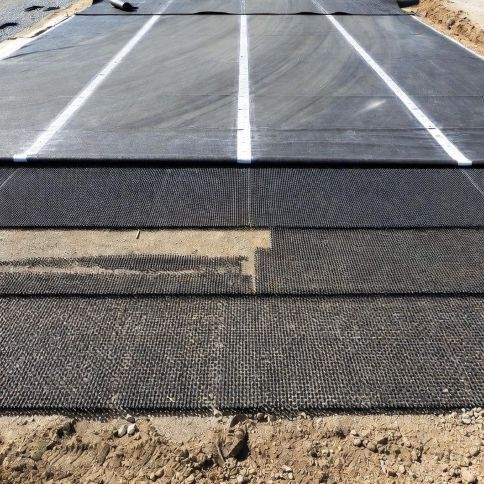
 Race engineers have long known that the speed and safety of a circuit depend as much on the ground beneath the asphalt as on the surface itself. High stress from cornering, braking, and rapid acceleration pushes the layers below the track to their limits. This is why modern racetracks rely on advanced geosynthetics that strengthen the base, control moisture, and keep the racing line smooth even under extreme loads.
As designers push for higher standards, many now turn to sustainable geotechnical materials to improve durability and reduce long term track damage. These materials help resist deformation, enhance water control, and support the heavy loads that motorsport environments demand.
The Growing Role of Geotextiles in Track Construction
Geotextiles are at the heart of most new circuit builds. They act as a separator between soil layers and help spread pressure across the base structure. This keeps the pavement stable so that dips, bumps, and cracks do not form under high speed racing. Their use also helps reduce costly repairs, especially on corners where cars exert intense lateral force.
Track engineers appreciate geotextiles because they are lightweight, easy to install, and effective across different soil conditions. They support even load distribution, which is crucial for long straights where cars reach peak speed and every millimeter of smoothness matters.
How Geogrids Strengthen High Load Zones
Geogrids provide reinforcement in areas that face repetitive, aggressive stress. These grids lock into compacted soil or aggregate to create a strong, stable layer that resists movement. Racetracks use them under braking zones, acceleration zones, and sharp turns where shear forces are strongest.
With geogrids in place, the risk of rutting or deep structural shifts decreases. This means fewer unexpected bumps that could affect a driver’s line or compromise safety. As circuits strive for consistency, geogrids have become a key reinforcement strategy.
Drainage Composites Keep Tracks Dry and Predictable
Water is one of the biggest threats to track quality. Even small amounts trapped within the layers can cause the pavement to weaken over time. Drainage composites solve this by directing water away from the track through engineered channels that keep the base dry.
These materials play a major role during tropical rain seasons or in places with high humidity. Dry layers equal predictable grip, and predictable grip is essential for both performance and safety. Many teams and event organizers credit improved drainage systems for helping maintain fair racing conditions in changing weather.
How Companies Improve Track Life and Performance
Manufacturers continue to innovate with materials that deliver stronger reinforcement and better moisture control. Companies like NovaGeo Asia produce solutions used across Asia’s circuits and training facilities. Their products help reduce surface degradation at high speeds, giving owners lower maintenance costs and longer lasting track surfaces.
In addition, these enhancements support skid zone stabilization. Runoff areas need firm, consistent ground to slow cars safely during an off track incident. Riders can also benefit from motorcycle safety gear insights that align with safer track conditions. Well reinforced skid zones help prevent dangerous vehicle rollovers or sudden drops in braking effectiveness.
Why Geosynthetics Are Now Essential in Motorsport Design
Racetrack designers must balance many goals. They need a smooth surface, predictable grip, strong edges, and reliable moisture control. They also have to consider long term costs. With these demands, geosynthetics offer a practical answer.
- Load spreading reduces structural strain.
- Soil stabilization keeps curves and straights uniform.
- Moisture management protects the track base.
- Reinforcement grids stop deformation in heavy stress areas.
These advantages explain why many circuits now rely on updated engineering methods rather than older soil compaction techniques. The results are stronger, safer, and more consistent racing environments.
Conclusion
Modern track construction continues to evolve as racing speeds rise and safety expectations grow. Engineers now depend on advanced reinforcement, better drainage, and improved material strength to create circuits that hold up to extreme use. With solutions that include sustainable geotechnical materials, track builders can create surfaces that remain fast, reliable, and safer for both drivers and racing teams. These advancements will continue shaping the future of motorsport design as technology develops and performance demands increase.